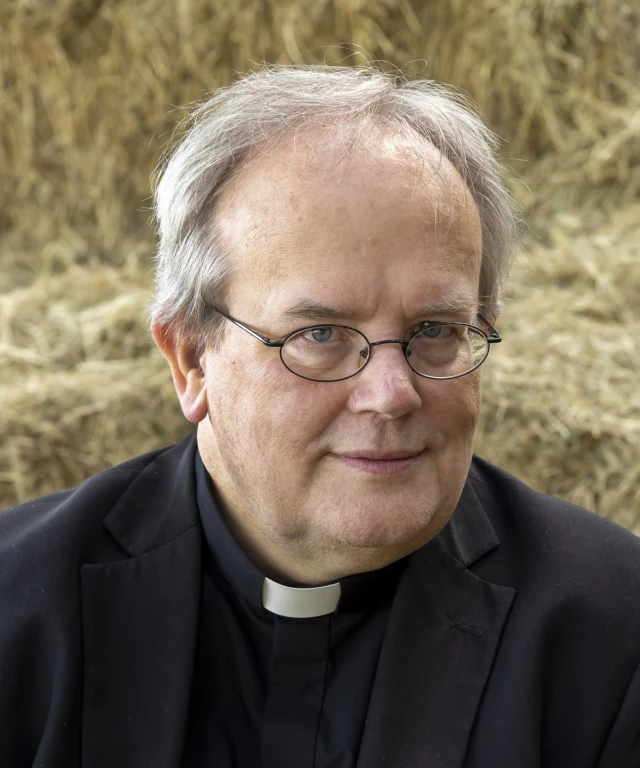
Father Geudens, Smakt (The Netherlands), November 27, 2026
Editorial Accountability & Author Profile
Published here on guidobortoluzzi.org is the complete treatise: From a Wounded Code to a Restored Blueprint. Across five interconnected chapters, this work brings into dialogue the classical doctrine of St. Augustine on natura bona and natura vitiata, the pastoral imagery of Pope Francis concerning our “deepest DNA” and the Church as a “field hospital,” and the hypothetical synthesis surrounding Don Guido Bortoluzzi (1907–1991).
This treatise does not shy away from the pressing and complex questions of our age regarding human origins, inner brokenness, and the relationship between the language of faith and contemporary science. Precisely by maintaining a clear distinction between pastoral metaphor, biblical and theological exegesis, and empirical-scientific or psychological description, space is opened for an honest and discerning pursuit of truth. In the concluding chapter, this coherence is presented along a dual track for both the visual thinker (beelddenker — through layered imagery, architectural blueprints, and key metaphors) and the analytical word thinker (woorddenker — through conceptual definitions, source delimitation, and structured argumentation).
This treatise has been conceived, developed, and edited on the initiative of Father Geudens, a priest of the Roman Catholic Church and webmaster of guidobortoluzzi.org, and is offered as an open invitation to deeper study, prayerful reflection, and fraternal dialogue.
Table of Contents
- Editorial Accountability & Author Profile
- General Introduction
- Chapter 1: The “Deepest DNA” of the Human Person – From Classical Tradition to Pope Francis
- 1.1 The Tension Between Origin, Rupture, and Interior Division
- 1.2 “Deepest DNA” in Pope Francis: Gift, Wounding, and Restoration
- 1.3 Transition to the Hypothetical Synthesis on guidobortoluzzi.org
- Chapter 2: Natura Vitiata and the Hypothetical Synthesis of Don Guido Bortoluzzi
- 2.1 St. Augustine: Natura Bona, Privatio Boni, and Natura Vitiata
- 2.2 The Bortoluzzi Model: Creazione Mediata, Rupture, and Admixture
- 2.3 Comparative Synthesis: St. Augustine, Bortoluzzi, and Pope Francis
- Chapter 3: Methodological Boundaries – Metaphor, Exegesis, Biology, and Psychology
- 3.1 Image and Metaphor Versus Natural-Scientific Concepts
- 3.2 Innate Drives, Learned Patterns, and Symbolic Readings of Original Sin
- 3.3 Guiding Principles for a Sound Reading of the Treatise
- Chapter 4: Re-creation in Christ – The Field Hospital, the Sacraments, and the Field Chapel
- 4.1 From Wounded Code to Re-creation in Christ (Beloved of the Father)
- 4.2 The Church as Field Hospital and the Four Sacraments of Healing
- 4.3 From the Field Hospital to the Field Chapel and Mary as Refugium Peccatorum
- Chapter 5: A Dual Track for Understanding – The Visual Thinker and the Word Thinker
- 5.1 Part A (For the Visual Thinker): The Layered Panorama, the Blueprint, and Key Images
- 5.2 Part B (For the Word Thinker): Concepts, Distinctions, and Line of Argument
- Conclusion
- Footnotes
- Bibliography
- Author Profile and Pastoral Accountability
From a Wounded Code to a Restored Blueprint
A Theological and Hypothetical-Synthetic Treatise on Creation, Rupture, and Restoration in Christ
General Introduction
The question of human origins and the roots of our interior brokenness stands among the most enduring inquiries in faith, philosophy, and science. Whereas Christian teaching on creation and the Fall points to an original harmony disrupted by sin, contemporary disciplines — ranging from developmental psychology to paleogenetics — investigate how human inclinations, behavioral patterns, and ancestral histories are formed and transmitted.
In this treatise, three distinct voices addressing this tension are brought into conversation: the classical theology of St. Augustine on natura bona and natura vitiata, the pastoral imagery of Pope Francis concerning our “deepest DNA” and the “field hospital,” and the hypothetical synthesis surrounding Don Guido Bortoluzzi (1907–1991) explored on guidobortoluzzi.org. The purpose is not to collapse distinct explanatory frameworks into one another, but to demonstrate how they can mutually illuminate each other when their proper nature and methodological boundaries are faithfully preserved.
Chapter 1: The “Deepest DNA” of the Human Person – From Classical Tradition to Pope Francis
1.1 The Tension Between Origin, Rupture, and Interior Division
In searching for the origin of humanity and the deepest cause of our inner brokenness, theology and modern genetics sometimes appear to inhabit separate worlds. Yet this tension touches upon an experience humanity has borne for centuries: the realization that we no longer dwell in our original, undisturbed harmony, but suffer a fundamental division within ourselves.
Long before the rise of modern genetics, thinkers such as Blaise Pascal and Joseph de Maistre highlighted the paradoxical nature of human existence.¹ They portrayed the human person as a being at once drawn toward the sublime and weighed down by inherent limitations, unruly drives, and spiritual restlessness — the grandeur et misère (greatness and wretchedness) of the human condition. Within the Catholic tradition, St. Augustine linked this interior fissure to the effects of Original Sin, speaking of an inherited wound (vitium originis) and the resulting disordered desire and inner conflict (concupiscentia).²
1.2 “Deepest DNA” in Pope Francis: Gift, Wounding, and Restoration
Pope Francis has clothed this classical trajectory of origin, rupture, and renewal in vivid, contemporary imagery by speaking of “DNA.” During his homily on the Solemnity of Pentecost on May 15, 2016, he described divine filiation — and the Spirit’s pledge not to leave us orphans — as our “deepest DNA,” which, however, “was wounded” and stands in need of healing.³ In his morning homily at the Domus Sanctae Marthae on February 7, 2017 (Questione di dna), he developed this same theme further.⁴
Read together, these teachings employ the term “DNA” not as a molecular-biological category, but as a spiritual and relational metaphor for origin, identity, and supernatural destiny:
- The Original Gift (Creation): God willed and created the human person as a child in his own image and likeness (imago Dei), endowed with an original blueprint of communion and integrity (bonum valde).⁵
- The Wounding of the Core: Through the rupture of sin and humanity’s inclination toward autonomous self-assertion apart from God, this innermost relational core was struck and obscured. Humanity continues to yearn for its origin, yet cannot achieve full restoration by its own unaided strength.
- Renewal and Re-creation: The working of the Holy Spirit and redemption in Christ — the New Adam — reorient the wounded blueprint once more toward divine filiation, opening the path toward a restored, “clean DNA.”
1.3 Transition to the Hypothetical Synthesis on guidobortoluzzi.org
Pope Francis’s reflection on an original yet wounded “deepest DNA” offers a striking theological point of contact for the research presented on guidobortoluzzi.org, which is dedicated to the insights and hypotheses of Don Guido Bortoluzzi (1907–1991). While Pope Francis speaks in a pastoral and existential register concerning spiritual wounding and divine mercy, the Bortoluzzi model explores how the dynamic of origin, rupture, and restoration may be brought into dialogue with Bortoluzzi’s visions and theology of creation, biblical exegesis, and prehistoric-anthropological inquiry.⁶
Here lies an indispensable distinction for the remainder of this treatise: Pope Francis uses “DNA” as a spiritual and pastoral metaphor for identity and grace-filled restoration, whereas on guidobortoluzzi.org that trajectory is situated within a broader hypothetical synthesis in which faith, textual study, and scientific inquiry converse.
Chapter 2: Natura Vitiata and the Hypothetical Synthesis of Don Guido Bortoluzzi
2.1 St. Augustine: Natura Bona, Privatio Boni, and Natura Vitiata
In St. Augustine of Hippo (354–430), the concept of a wounded nature receives rigorous doctrinal articulation, particularly in his treatises on grace and Original Sin (De civitate Dei, De nuptiis et concupiscentia).⁷ Augustine draws a sharp distinction between the goodness of original creation and the disorder introduced by the Fall.
Everything God created is fundamentally good and ordered (natura bona and ordo). For Augustine, evil is neither an independent cosmic force nor a created substance, but a privatio boni — a privation or distortion of the good. Through the Fall, human nature was not utterly annihilated (annihilata), yet it was weakened, wounded, and thrown out of equilibrium (natura vitiata). Within the human soul, this manifests itself in an internally divided will (voluntas divisa) and in disordered cravings or impulses (concupiscentia) that disrupt original harmony.
With regard to non-human creation, Augustine maintains a balanced perspective: animals, plants, landscapes, and the cosmos bear no moral guilt of their own and remain the handiwork of the Creator; nevertheless, humanity’s disordered orientation colors the way human beings perceive, cultivate, and use the created world. Because humanity cannot liberate itself from this fallen condition by its own strength (termed in the stark polemical language of his anti-Pelagian writings a massa damnata apart from grace), renewal depends wholly upon divine grace, awaiting final consummation at the end of time.
2.2 The Bortoluzzi Model: Creazione Mediata, Rupture, and Admixture
In the writings of Don Guido Bortoluzzi and the studies on guidobortoluzzi.org, the motif of original purity, rupture, and restoration is situated within a wider creational and prehistoric horizon. Central to this framework is the concept of Creazione Mediata (“Mediated Creation”), which denotes the original creational order and purity prior to the historical rupture in human origins.⁸
Within this hypothetical synthesis — further elaborated in the dossiers on guidobortoluzzi.org — the impairment of the original blueprint or “code” is examined not solely on a theological plane, but also in relation to questions of prohibited admixture (ibridazione) in human prehistory. In this context, key Hebrew biblical terms (such as adam/adama, dam, and tzela) and Old Testament boundaries against admixture are re-examined alongside findings from modern paleogenetics, including research into archaic admixture within Homo sapiens (such as the pioneering work of Svante Pääbo and his colleagues from 2010 onward).⁹ Here, the trajectory moves from a “wounded code” or historical impairment toward renewal and restored, “clean DNA” through union with Christ and the sacraments.
2.3 Comparative Synthesis: St. Augustine, Bortoluzzi, and Pope Francis
When St. Augustine, Don Guido Bortoluzzi (together with the synthesis on guidobortoluzzi.org), and Pope Francis are placed side by side, their perspectives complement one another in a multi-layered portrait of origin, rupture, and restoration:
| Dimension | St. Augustine (Natura Vitiata) | Bortoluzzi & guidobortoluzzi.org | Pope Francis (“Deepest DNA”) |
| Original State | Natura bona and ordo: an ordered creation directed toward the Supreme Good. | Creazione Mediata: original creational order and purity prior to the rupture. | Dignity and vocation of the human person as a beloved child in our “deepest DNA.” |
| Rupture or Impairment | Natura vitiata, voluntas divisa, and concupiscentia: interior division and spiritual weakness. | Rupture and impairment of the original code/blueprint in history, exegesis, and ibridazione. | Wounded “deepest DNA”: our innermost relational core struck and obscured. |
| Path of Restoration | No self-salvation; healing and right ordering of love (caritas) through grace and eschatological fulfillment. | Passage from a wounded code to renewal and restored (“clean”) DNA in Christ. | Divine grace, mercy, and the “field hospital” where wounded lives are tended. |
The strength of these three voices together lies in their mutual complementarity: St. Augustine supplies the ontological and volitional foundation regarding the goodness of creation and interior disorder; Bortoluzzi and guidobortoluzzi.org widen the horizon into a hypothetical framework where creation, exegesis, and prehistoric or genetic inquiries converge; and Pope Francis brings the entire synthesis home to the concrete, wounded person in need of mercy and healing.
Chapter 3: Methodological Boundaries – Metaphor, Exegesis, Biology, and Psychology
3.1 Image and Metaphor Versus Natural-Scientific Concepts
When theological categories such as Original Sin or natura vitiata are brought alongside terms like “DNA,” “blueprint,” or “code,” a fertile yet delicate intersection arises between the language of faith and the natural sciences. Both in the pastoral imagery of Pope Francis and in the hypothetical synthesis on guidobortoluzzi.org, these images make immediately tangible that human brokenness is no isolated, superficial slip, but a deeply rooted condition affecting generations and relationships.
Nevertheless, figurative language demands careful methodological delimitation. Images such as “DNA” and “blueprint” illuminate interior, relational, and spiritual continuity, yet they are not identical with molecular genetics. Whenever these two registers of language are conflated uncritically, four pitfalls emerge:
- The Category Mistake (Reading Metaphor as Biology): Molecular DNA consists of nucleotides, genes, and biological mechanisms of heredity, whereas Original Sin and natura vitiata pertain to existential meaning, moral freedom, the orientation of the will, and communion with God.
- Biological Determinism: If a moral or spiritual rupture is construed as an unalterable genetic code, awareness of personal responsibility, conscience, and genuine conversion is obscured.
- Moralizing Biological Processes: Natural-scientific mechanisms such as mutation, selection, and competition are descriptive processes; labeling them directly as “sinful” is a theological misstep.
- Conflating Spiritual Renewal with Physical Repair: Redemption and sanctification signify reconciliation and interior transformation by grace, not a genetic modification or a purely biologically “unblemished” body.
3.2 Innate Drives, Learned Patterns, and Symbolic Readings of Original Sin
The term “nature” likewise calls for precision, as discussions of a wounded world touch upon two distinct realities: human nature (our drives, inclinations, and moral vulnerability) and non-human nature (the living world and the physical cosmos). While a strictly empirical-scientific approach describes nature as an ongoing process of adaptation and change without moral rupture — and Eastern traditions often speak of ignorance (avidya) or cosmic disharmony — a symbolic reading of Original Sin resonates closely with what biology and psychology reveal about human functioning.
From an evolutionary-biological and psychological standpoint, human beings are born with deeply ingrained drives for self-preservation, security, status, and competition. In themselves, these are natural survival mechanisms devoid of moral guilt; they acquire moral weight in how a person governs them or employs them to the detriment of others. Superimposed upon these drives are learned patterns stemming from early attachment, upbringing, conditioning, and cultural transmission, whereby fears, defense mechanisms, and habits pass from generation to generation.
Here, a symbolic reading of Original Sin and the human sciences converge: both acknowledge the tension between immediate impulse and interior wholeness, the universal vulnerability of every human person, and the reality that entrenched patterns rarely yield to a single rational resolution alone. At the same time, the boundary remains firm: empirical sciences explain how mechanisms arise and evolve, whereas theology and the quest for meaning ask what it signifies that humanity’s relationship with the good, with neighbor, and with God falters so persistently.
3.3 Guiding Principles for a Sound Reading of the Treatise
For a lucid and intellectually honest reading of this treatise — and particularly of the hypothetical synthesis surrounding Don Guido Bortoluzzi — three guiding principles serve as reliable bearings:
- Distinguish the Register of Language: Always clarify whether a term is functioning as a pastoral or existential metaphor, as an exegetical and theological category, or as an empirical-scientific description.
- Keep the Historical Context of Sources Visible: St. Augustine writes within the late-antique controversy over grace and free will; Pope Francis speaks from a contemporary pastoral ministry; and on guidobortoluzzi.org, Bortoluzzi’s visions and creation motifs are brought into conversation with biblical exegesis and prehistoric inquiry.
- Read Images as Windows, Not as Endpoints: Metaphors such as “blueprint” or “wounded code” open a window onto a profound mystery, yet they must never foreclose the mystery of human freedom and divine grace.
Chapter 4: Re-creation in Christ – The Field Hospital, the Sacraments, and the Field Chapel
4.1 From Wounded Code to Re-creation in Christ (Beloved of the Father)
The heart of the Christian message of salvation is that the human person, despite the rupture with his origin, is never cast aside, but remains fundamentally called to be a child and beloved of the Father. Because humanity cannot restore its wounded blueprint by its own unaided strength, renewal is initiated by God himself in the Person of Jesus Christ.
From a Christological perspective, Christ is the New Adam: the perfected Man in whom the unblemished image of God and the original harmony between divine design and human vocation once again become visible and efficacious.¹⁰ Redemption is therefore neither a merely juridical acquittal nor a superficial outward repair, but a profound interior re-creation. Through the grace of Christ, the impaired code is transformed from within into a restored, “clean DNA,” in which divine filiation comes alive once more in true freedom.
4.2 The Church as Field Hospital and the Four Sacraments of Healing
This passage from a wounded to a restored blueprint does not unfold as an instantaneous, magical reversal, but as a concrete pilgrimage of healing over time. Here Pope Francis’s image of the Church as a spiritual field hospital converges seamlessly with the motif of wounded “deepest DNA.”¹¹ A field hospital stands amid the stark reality of wounded and broken lives: it begins by stanching bleeding, cleansing wounds, and offering restorative care.
Within this space of grace and healing, the sacraments serve as the concrete channels through which Christ effects the restoration of “clean DNA” in the believer:
- Baptism: Marks the radical beginning of re-creation. The old, wounded self dies with Christ, and the newly baptized is born again as a child of God, grafted onto the New Adam and clothed in original dignity.¹²
- Reconciliation (Penance/Confession): Operates as a continual spiritual cleansing whenever baptismal grace is wounded anew by personal sin, hardness of heart, or spiritual blindness. The sacrament bestows merciful first aid and restores interior openness to grace.¹³
- Confirmation: Seals and strengthens the renewed identity through the outpouring of the Holy Spirit — the very Spirit who in Pope Francis’s Pentecost homily awakens wounded “deepest DNA” back to life and imparts strength to live as a mature witness to the Gospel.¹⁴
- The Most Holy Eucharist: Nourishes and sustains the restored life from within. In Holy Communion, the believer is drawn ever more deeply into the life and redemptive sacrifice of Christ himself, and gradually conformed to the image of the One received.¹⁵
4.3 From the Field Hospital to the Field Chapel and Mary as Refugium Peccatorum
Care within the field hospital of the sacraments is an indispensable threshold, yet it points beyond itself toward a still deeper destination: the movement from the field hospital to the field chapel.¹⁶ Whereas the field hospital is the place where wounds are bound and the soul finds respite, the field chapel is the sanctuary of stillness, Eucharistic adoration, and filial intimacy with God the Father.
In that interior silence, attention shifts away from one’s own brokenness toward the loving presence of the Creator. Beyond shame, spiritual constriction, and the burden of striving to carry everything alone, the believer may there receive in humble trust what can never be achieved by self-effort: coming home as a beloved child into the Father’s heart.
Along this path of healing, the believer is accompanied by the Blessed Virgin Mary, Mother of the Church. In Catholic tradition she is invoked as Refugium Peccatorum (Refuge of Sinners): she looks with a gentle, maternal gaze upon all that dwells within the hearts of her children, even where words fail, and leads them unerringly to Christ, in whom the restoration of humanity and the final consummation of God’s creation are brought to fulfillment.¹⁷
Chapter 5: A Dual Track for Understanding – The Visual Thinker and the Word Thinker
In the preceding chapters, the movement of origin, rupture, and restoration has been traced step by step along theological, exegetical, anthropological, and sacramental lines. To make that coherence accessible across different modes of perception and thought, this concluding chapter opens a dual track: first for the visual thinker (beelddenker), who apprehends structures, fields of force, and movements within a single spatial whole, and then for the analytical word thinker (woorddenker), who finds clarity through precise conceptual definitions, historical contexts, and logical boundaries.
5.1 Part A (For the Visual Thinker): The Layered Panorama, the Blueprint, and Key Images
For a visual thinker, this entire subject matter — the interplay of innate drives, learned patterns, and a symbolic reading of Original Sin — does not function as a sequence of isolated propositions, but as a living, spatial whole grasped at a glance. Where a word thinker analyzes concepts step by step, a visual thinker immediately perceives structures, fields of force, and dynamic movements.
The Layered Panorama and the Blueprint with a Fault Line
Rather than treating biology, psychology, and symbolism as three separate compartments, the visual thinker perceives them as transparent overlays — like tracing paper laid over an architectural drawing, or a unified blueprint marked by a fault line and a path of restoration:
- The Lower Layer and Foundation Lines (Origin and Innate Drives): An ancient, powerful landscape carved with deep riverbeds, and on the blueprint the load-bearing lines providing stability and survival (security, self-preservation, fear, desire). In St. Augustine this resounds in the natura bona and ordo of creation; in Don Guido Bortoluzzi and on guidobortoluzzi.org in the original creational order (Creazione Mediata) and purity; in Pope Francis in the dignity of the human person as a beloved child, inscribed within our “deepest DNA.”
- The Middle Layer and Alterations (Learned Patterns): Paths, fences, and bridges — and on the architectural plan subsequent extensions and additions — laid down over the course of life, upbringing, and culture. Some lines offer support and direction; others form lopsided additions or makeshift bandages that once served to protect, yet now create strain.
- The Upper Layer, Fault Line, and Restoration Path (Disruption and Renewal): Cutting across the design runs a fissure, haze, or shift in the main line (natura vitiata, voluntas divisa, wounded blueprint, or damaged “deepest DNA”). Alongside this appears not merely a path of self-reliance, but a restoration path of grace-filled renewal and transformation: in St. Augustine, divine grace re-ordering love (caritas); in Pope Francis, mercy and the “field hospital” where wounds are tended; and in the synthesis on guidobortoluzzi.org, the passage from a wounded code to restored, “clean DNA” in communion with the origin.
Three Key Images and the Interplay of the Three Voices
Three concrete images make this movement immediately tangible:
- The Out-of-Tune Soundboard (Resonance and Disharmony): A musical instrument whose strings are finely crafted, yet slightly out of pitch. When struck, the entire body vibrates with a discordant overtone; here restoration means bringing the instrument back into harmony, not merely pronouncing a legal acquittal.
- The Mirror with a Crack or Haze: A clear mirror that reflects light without distortion, yet through a crack or haze subtly warps incoming images — just as fear or ingrained patterns can color perception without shattering the glass itself.
- The Automatic Rut Versus the Open Field: Deeply worn cart ruts into which wheels sink automatically whenever attention lapses, set against the open field where awareness, conscience, and free choice become visible as soon as one steps out, looks from above, and sees wide space beside the track.
In this visual synthesis, the three voices complement one another spatially: St. Augustine sketches the tension within the frame (without turning animals or material creation into sinners); Bortoluzzi and guidobortoluzzi.org draw the broad horizon of origin, hominization, and prehistoric or anthropological connections; and Pope Francis focuses closely on the wounded point in concrete human life where healing is sought.
What the Visual Thinker Stays Alert To
A spatial image or blueprint is an illuminating window, not an empirical measuring instrument. The visual thinker therefore remains attentive to two essential cautions: a spiritual or symbolic “blueprint” or “DNA” diagram is neither a molecular DNA map nor a rigid mold that excludes human freedom and renewal, and the historical context of St. Augustine must remain distinct from the broader synthesis on guidobortoluzzi.org. Precisely in the transition from a locked-in, worn rut to an open space where air, light, and movement return, the heart of the image is experienced.
5.2 Part B (For the Word Thinker): Concepts, Distinctions, and Line of Argument
For the word thinker, clarity emerges through careful definition of concepts, historical and textual placement, and strict vigilance over the logical boundaries between the sources involved.
Core Concepts by Line of Thought
- St. Augustine (Natura Bona, Natura Vitiata, and Original Sin): Everything created bears as natura bona a goodness and order proper to its nature; evil is neither an independent primeval force nor a created substance, but a privatio boni (a privation or distortion relative to the good). Through Original Sin, human nature is not annihilated, yet is weakened and disordered (natura vitiata), marked by an internally divided will (voluntas divisa) and disordered appetites (concupiscentia). Without grace (massa damnata apart from grace), humanity cannot heal itself by its own strength; renewal requires divine grace, awaiting full consummation at the end of time.
- Pope Francis (“Deepest DNA” and Field Hospital): “Deepest DNA” serves as pastoral and existential language of faith denoting the original core, identity, and vocation of the human person wounded by the rupture with the good and with God. In the image of the Church as a field hospital, the central focus is not condemning the rupture, but recognizing the wound and offering mercy, forgiveness, and interior renewal.
- Don Guido Bortoluzzi and guidobortoluzzi.org (Hypothetical Synthesis): In the synthesis surrounding Bortoluzzi, creational order (Creazione Mediata), rupture, and restoration are brought into relation with Pope Francis’s “DNA” motif and with classical doctrine on Original Sin. The trajectory moves from an impaired or wounded blueprint/“code” toward renewal and restored (“clean”) DNA in union with Christ and the sacraments, within a wider framework that also engages anthropological, exegetical, and prehistoric questions.
Drives, Learned Patterns, and Methodological Delimitation
In the line of argument, two distinctions anchor a sound reading:
- Source and Context: St. Augustine formulates his doctrine within the late-antique controversy over grace and free will; Pope Francis speaks as a contemporary Roman Pontiff in a pastoral context; on guidobortoluzzi.org, a specific hypothetical synthesis takes shape in which Bortoluzzi’s writings and visions, Francis’s imagery, and broader research hypotheses interlock.
- Metaphor, Human Science, and Natural Science: Concepts such as “DNA” and “blueprint” illuminate spiritual, psychological, and relational continuity, yet must not be equated with molecular heredity, biological determinism, or a reduction of the human person to mere innate drives or learned patterns. Innate drives and learned patterns help explain how psychological mechanisms and repetitive cycles operate, whereas theological and existential meaning centers on relationship to the good and to God, moral conscience, freedom of choice, and renewal in grace.
Conclusion
This treatise demonstrates that speaking of a “wounded nature,” a “wounded code,” or “deepest DNA” becomes genuinely fruitful when two extremes are avoided: on the one hand, flattening the language of faith into empirical science, and on the other, losing sight of the concrete, wounded human person in today’s world. By giving due weight to the contributions of St. Augustine, Don Guido Bortoluzzi (guidobortoluzzi.org), and Pope Francis, a horizon opens in which humanity’s original vocation is never erased, but can come alive anew through grace, the sacraments, and contemplative stillness in the nearness of God the Father.
Footnotes
- Cf. Blaise Pascal, Pensées (1670) and Joseph de Maistre, Les Soirées de Saint-Pétersbourg (1821).
- Cf. Aurelius Augustine, De nuptiis et concupiscentia (419–421) and De civitate Dei, Book XIV, 1.
- Pope Francis, Homily during Holy Mass on the Solemnity of Pentecost, St. Peter’s Basilica, Vatican City, May 15, 2016 (cf. Jn 14:18).
- Pope Francis, Morning Homily at the Domus Sanctae Marthae (Questione di dna), February 7, 2017.
- Cf. Genesis 1:27 and 1:31; Catechism of the Catholic Church, nos. 374–379; Pope Francis, General Audience, April 22, 2015.
- See the contributions and dossiers on Don Guido Bortoluzzi (1907–1991) and the analyses on guidobortoluzzi.org.
- Cf. Aurelius Augustine, De civitate Dei, Books XI–XIV, and the anti-Pelagian treatises on grace and Original Sin.
- See the discussion of Creazione Mediata and the creation and restoration motifs of Don Guido Bortoluzzi on guidobortoluzzi.org.
- See the dossiers on ibridazione and biblical exegesis (including adam/adama, dam, and tzela) on guidobortoluzzi.org, connected in part with the paleogenetic research of Svante Pääbo et al., “A Draft Sequence of the Neandertal Genome,” in Science, Vol. 328, Issue 5979 (May 7, 2010).
- Cf. Romans 5:12–19 and 1 Corinthians 15:45–49.
- Pope Francis, Interview with Antonio Spadaro, S.J., in La Civiltà Cattolica (September 19, 2013); cf. Regina Caeli, April 3, 2016.
- Cf. Catechism of the Catholic Church, no. 1279.
- Cf. Catechism of the Catholic Church, no. 1446.
- Pope Francis, Homily on the Solemnity of Pentecost, May 15, 2016.
- Cf. Catechism of the Catholic Church, nos. 1391–1395.
- Cf. Pope Francis, Meditation at Casa Santa Marta, November 14, 2017.
- Cf. Second Vatican Council, Dogmatic Constitution Lumen Gentium, no. 68.
Bibliography
- Augustine of Hippo, De civitate Dei and De nuptiis et concupiscentia.
- Bortoluzzi, Guido (1907–1991), writings, visions, and analyses concerning Creazione Mediata and human origins, made available via guidobortoluzzi.org.
- Catechism of the Catholic Church (nos. 374–379, 1279, 1391–1395, 1446).
- De Maistre, Joseph, Les Soirées de Saint-Pétersbourg (1821).
- Francis (Pope), Homily on the Solemnity of Pentecost (May 15, 2016); Morning Homily Questione di dna at the Domus Sanctae Marthae (February 7, 2017); Interview with Antonio Spadaro, S.J., in La Civiltà Cattolica (September 19, 2013); General Audience (April 22, 2015); Regina Caeli (April 3, 2016); Meditation at Casa Santa Marta (November 14, 2017).
- Pääbo, Svante et al., “A Draft Sequence of the Neandertal Genome,” in Science, Vol. 328, Issue 5979 (May 7, 2010).
- Pascal, Blaise, Pensées (1670).
- Second Vatican Council, Dogmatic Constitution Lumen Gentium (no. 68).
Author Profile and Pastoral Accountability
About the Author and Initiator
This treatise was conceived on the initiative of Father Jack Geudens (pastoor Geudens), a priest of the Roman Catholic Church and webmaster of guidobortoluzzi.org. Out of his pastoral ministry and scholarly engagement, he is the initiator behind the theological inquiries, articles, integrated developments, and final editing brought together on this platform and in this work.
Motivation and Ecclesial Accountability
At the foundation of this work lies a sincere pursuit of truth and the conviction that the Catholic faith must never shy away from the great, complex, and at times challenging questions confronting contemporary humanity. Questions surrounding origins, evolution, human brokenness, and the tension between the language of faith and modern science call not for hasty condemnations or facile answers, but for patient listening, intellectual honesty, and theological discernment.
As a priest of the Catholic Church, Father Geudens writes and edits in fidelity to Sacred Tradition, Sacred Scripture, and the Magisterium, trusting that faith and reason have nothing to fear from one another, but can mutually illuminate each other (fides et ratio). The lines explored in this treatise regarding the work of Don Guido Bortoluzzi are therefore expressly presented as a hypothetical and exploratory synthesis: an open invitation to deeper study, fraternal dialogue, and further reflection, in service to both seekers of truth and the ecclesial community.